

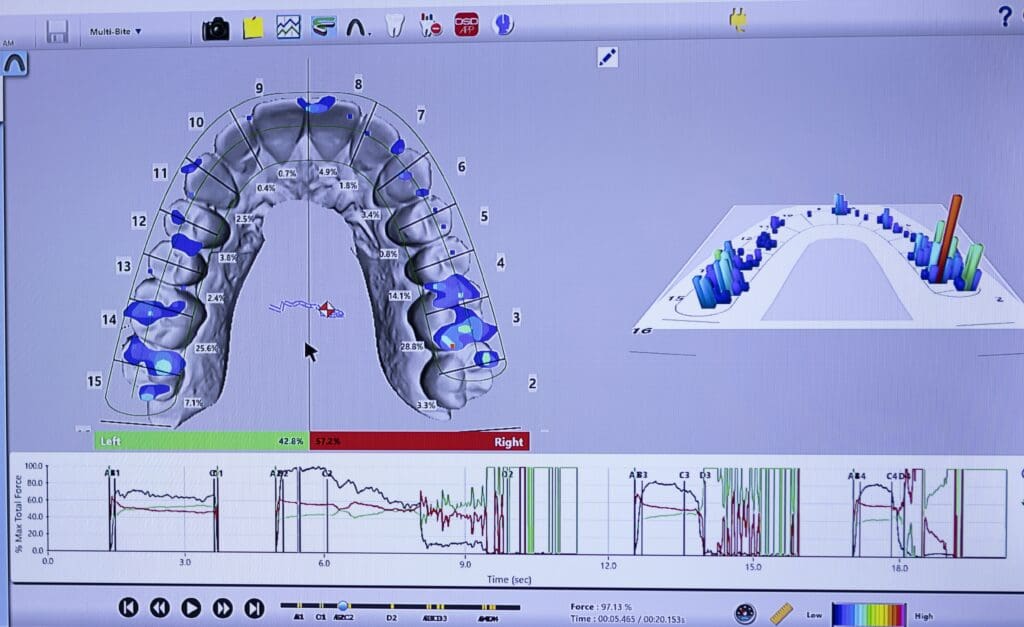
What Is DTR Therapy?
Disclusion Time Reduction (DTR) is an advanced, computer-guided therapy that identifies and corrects bite imbalances that cause muscle hyperactivity, leading to many biological disturbances, including facial pain, TMJ pain, migraines, headaches, neck and back pain, vertigo, and tinnitus. This muscle hyperactivity is caused by the back teeth contacting each other at improper contact points during normal function. Hyperactivity results in overworked muscles and a significant buildup of lactic acid in the chewing muscles, leading to pain, soreness, and weakness.
Technology used with DTR
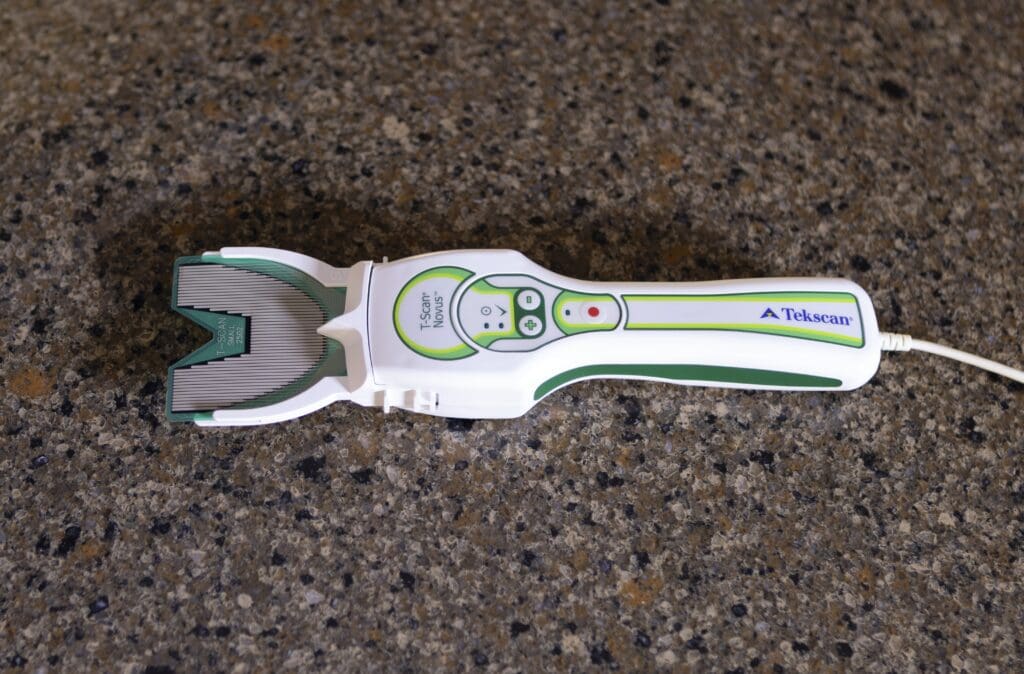
In this treatment, we use the T-Scan and EMG (Electromyography) to measure bite timing and muscle activity in real time. The T-scan is the most precise bite computer in dentistry, and the information it provides allows Dr. Orcutt to make microscopic, painless enamel adjustments to correct the bad bite.
The EMG (electromyograph) is a series of electrodes that are placed on the skin over the patient’s chewing muscles to precisely measure their activity before, during, and after chewing movements. These recordings show Dr. Orcutt the condition of the muscles and provide specific evidence of how much the muscles relax after treatment.
Symptoms DTR Can Help With
There are upwards of 30 different symptoms of TMJ. They can be broken down into various categories. Jaw and joint symptoms, head and facial pain symptoms, ear-related symptoms, neck and shoulder symptoms, and neurological symptoms. Below are some of the more common symptoms my patients experience:
- TMJ or jaw joint pain
- Headaches and migraines
- Facial muscle tension, fatigue, and swelling of the face
- Cold Tooth sensitivity with no cavities present
- Clenching or grinding (bruxism)
- Neck or shoulder pain related to bite stress
- Difficulty chewing or feeling that “bite is off”
- Trigeminal Neuralgia
- Meniere’s Disease
- Vertigo
- Tinnitus
How DTR Works
- Digital Bite Analysis using the bite computer: Using the T-Scan (bite computer), we record and measure your bite forces and timing. This is the single most precise way of measuring someone’s bite. Carbon paper is the industry standard, but studies show it is only 17% accurate. Carbon paper also cannot tell dentists the amount of force or the timing of tooth contact, which is critically important. The T-Scan is the only instrument in dentistry that can accurately measure this information.
- Muscle Activity Mapping: The EMG painlessly records muscle contractions during jaw movement. It is very important to measure how the muscles respond when DTR is performed. The vast majority of TMJ symptoms are due to head/face/neck muscle hyperactivity. The goal of DTR therapy is to reduce the activity of the muscles so that they can relax, and the only way to measure this is by using the EMG
- Precision Adjustments: We identify where the bite causes muscle overload and make minor, precise, pain-free micro adjustments. These microadjustments are very small adjustments in the enamel. This does not harm the teeth; in fact, doing these adjustments significantly reduces your risk of fracturing your tooth. Ensuring the teeth come together properly is very beneficial to the teeth.
- Verification: The T-Scan confirms the new, balanced bite in real time, and the EMG provides real-time muscular information.
- Results: Many patients experience relief within hours to days.
Benefits of DTR Therapy
There is no downside to DTR therapy. DTR therapy instantly improves your bite and is pain-free. The instant the DTR is performed, your risk of tooth fracture, gum disease, gum recession, and tooth loss is drastically reduced. Other benefits include:
- Rapid relief from chronic pain and tension in the face, head, shoulders, and back
- Improved comfort during chewing and speaking. Your bite will be stronger.
- Reduced headaches and facial pain
- Non-surgical and drug-free
- Scientifically measured results — not guesswork
- Long-term stability and improved quality of life
- No need for plastic orthotics or mouthguards
Why Choose Dr. Orcutt for DTR Therapy
Dr. Orcutt has over 20 years of training in comprehensive and neuromuscular dentistry and has been treating patients with TMJ for many years. He has extensive experience helping his patients manage their symptoms through DTR therapy. It takes a lot of dedication, time, energy, and investment to become DTR certified. Currently, Dr. Orcutt is 1 of only 2 dentists in Northern California to have completed the challenging DTR certification process.
Dr. Orcutt utilizes a patient-centered approach with advanced technology like the high-tech T-scan bite computer, the EMG to measure the facial muscles of his patients, the JVA to determine the scope of damage in the jaw joint, and the CBCT, a 3-D dental X-ray that allows Dr. Orcutt to visualize the TMJ joint in 3 dimensions. Dr. Orcutt focuses on resolving the root cause of his patients’ pain, not covering up with a band-aid like Botox and orthotics.
What to Expect During Your First Visit

Dr. Orcutt and his team will be very attentive and listen to your concerns, problems, and wishes. We will ask you a series of probing questions to identify the source of your concerns. Dr. Orcutt’s team will use the bite computer (T-Scan) to measure your bite, and they will take a 3-D scan of your teeth with the high-tech iTero scanner (no radiation, just a series of intraoral photos we turn into a very accurate 3-D model of your teeth). Dr. Orcutt’s team will also listen to your jaw joints to help us determine the extent of any joint damage. And finally, we will take a 3-D X-ray to examine your jaw joints with precision.
If indicated, Dr. Orcutt may begin DTR therapy. DTR is typically a comfortable 2-3 appointment process. Occasionally, Dr. Orcutt may need to add bonding to the canines (no numbing or drilling required) to allow them to guide the bite and achieve the best possible result. Dr. Orcutt has received extensive training in TMJ and facial pain therapy and is one of only a couple dentists in Northern California who have become certified to perform Disclusion Time Reduction.
FAQ Section
Is DTR therapy painful?
DTR is quite painless, and there is never a need to be numb during the appointment. Dr. Orcutt will make very precise micro adjustments that will not be painful.
How long does it take to feel relief?
It depends. Many people experience relief immediately, while others experience relief over a few months or even longer. Most patients experience some relief right away; they notice facial muscle relaxation and almost an immediate reduction of cold sensitivity in their teeth.
Will insurance cover this treatment?
Insurance does not cover the cost of this treatment. Unfortunately, Dental Insurance companies don’t understand that if they covered DTR treatment, they would improve their bottom line. The reason is that once a person has DTR, they are much less likely to fracture their teeth, have gum disease, have gum recession, and have cavities.
How is DTR different from a regular bite adjustment?
DTR is different because the standard of care (which is a minimal standard, not the best) is to use carbon paper to check a patient’s bite. These carbon paper marks do not tell the dentist how hard the tooth is hitting or the timing involved. The only way to determine how hard a patient is biting and the timing of the bite is through the bite computer, also known as the T-Scan.
Can DTR help if I’ve already had TMJ treatment elsewhere?
It depends on your bite scheme classification. If you have a class I or class III bite scheme, then yes, DTR will likely help. If you have a class II bite scheme, then likely your only hope for relief is using an orthotic for the rest of your life, or possibly jaw surgery.
What if I have a lot of gum recession but no jaw or facial pain? Can the DTR help me with the recession?
Unfortunately, if you have gum recession, it also means your bad bite has caused bone atrophy (i.e., bone resorption). There is no way to get the bone back. Once you lose it, that’s it. You may be able to have gum grafting once you have gum recession, but if you don’t fix your bite, then the gum grafting won’t be as successful as it could be. A good bite is very important for successful gum surgery. DTR will help to minimize further bone loss and gum recession. As long as the teeth touch properly, you will have minimal gum recession problems, if any.
How long does each session of DTR take?
Your first session with DTR will be your longest. Expect to be in the office for at least 2 hours. We need to gather a lot of information on the first visit, and this is the visit when most of the adjustments will be made. The subsequent visits will likely be approximately 30-60 minutes long.
Dr. Orcutt utilizes the T-Scan in 2 different ways. If you are asymptomatic (no jaw or facial pain, migraines, headaches, vertigo, or tooth sensitivity), but you show signs of a bad bite like bone loss, gum recession, gum disease, or tooth loss, then Dr. Orcutt will offer to perform a “Bite Optimization” for you. A bite optimization is where only the T-Scan is used, not the other high-tech equipment. It is intended to minimize future bone loss and gum recession, reduce the likelihood of cracked and fractured teeth, and reduce the need for gum surgery.
Currently, a bite optimization runs around $1,500 and takes 2-3 short appointments. If you are symptomatic (headaches, migraines, TMJ jaw pain, sensitive teeth, trigeminal neuralgia, etc.), DTR is indicated using the T-scan, EMG, JVA, CBCT, and iTero. This typically takes 2-4 appointments and runs about $3,500.
What if I am symptomatic and I only want a bite optimization and not DTR due to the cost?
A bite optimization is not indicated for someone with TMJ symptoms. The bite optimization does not utilize all the high-tech equipment that we use for patients with symptoms and will likely not achieve the best results. If you are symptomatic, the protocol is to perform the DTR using all necessary tools to provide the best possible outcome for you.
How quickly does the cold sensitivity go away?
If you have cold sensitivity due to your bad bite, you may often see a reduction in your cold sensitivity within a couple of weeks. We’ve seen it disappear almost instantaneously, and we’ve seen it take some time to get better.
Will I need to wear a nightguard or retainer after DTR therapy?
It depends on your symptoms prior to the therapy. Frequently, we suggest not using a mouthguard or retainer after DTR. Sometimes we may decide to make an acrylic retainer with wires that don’t cover your biting surfaces. Covering the biting surfaces may trigger more TMJ/facial pain symptoms.