
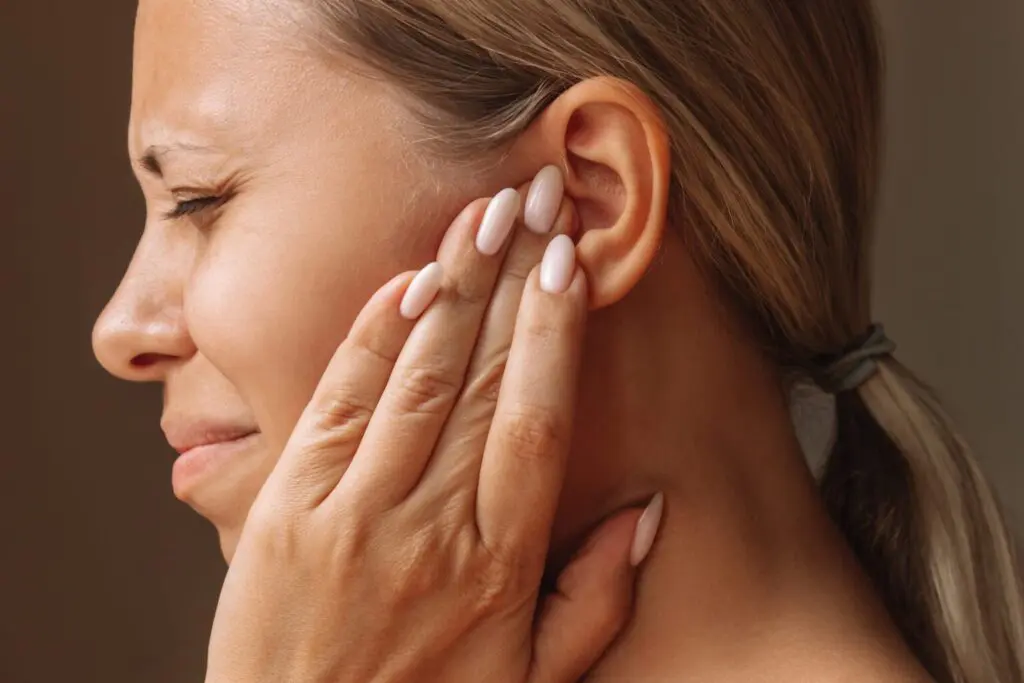
What if your daily jaw discomfort starts with how your teeth come together? TMJ pain is more connected to your bite than most people realize, and understanding why could change everything.
Treatment for TMJ Pain: Relief for Jaw Pain and Discomfort
TMJ treatment addresses pain and problems in the temporomandibular joint, the hinge that connects your jaw to your skull. Think of it like tuning a stiff door hinge so it moves smoothly again.
Who It’s For
You may benefit from TMJ treatment if you experience any of the following:
- Jaw pain or stiffness
- Clicking or popping sounds when you chew
- A jaw that locks or feels stuck
- Frequent headaches or facial pain
How It Works
We start by evaluating your jaw, bite, and posture using simple tests and, when needed, imaging. From there, we build a personalized plan just for you. Treatment options may include bite guards, gentle exercises, posture adjustments, or stress management techniques.
Benefits
- Less jaw pain and discomfort
- Easier, more comfortable chewing
- Fewer headaches
- Better sleep
Treatment is usually non-surgical, and the sooner you seek help, the faster you may find relief. If symptoms continue, we will work with you to explore next steps.
How Your Bite Can Trigger TMJ Pain
Your bite does more than help you chew. When your teeth don’t come together properly, it can create a chain reaction of tension, discomfort, and ongoing TMJ pain that affects your daily life.
A misaligned bite places uneven pressure on your jaw joint, forcing the surrounding muscles to work harder than they should. Over time, this extra strain can lead to:
- Persistent jaw tension that feels worse in the morning or evening
- Recurring headaches that seem unrelated to your teeth
- Clicking or popping when you open and close your mouth
The connection between your bite and your symptoms isn’t always obvious at first. Many people manage headaches or jaw soreness for years without realizing their teeth alignment is the root cause.
Identifying bite-related TMJ pain starts with a thorough evaluation. We look at how your teeth meet, how your jaw moves, and where tension is building to build a clear picture of what’s driving your discomfort.
The good news is that bite-related TMJ problems are very treatable. With the right approach, you can find real, lasting relief.
| Treatment Option | What It Does | Best For |
|---|---|---|
| Bite Guard (Night Guard) | Cushions teeth and reduces jaw clenching during sleep | Bruxism, nighttime jaw tension, morning pain |
| Bite Adjustment | Corrects uneven tooth contact to reduce joint strain | Misaligned bite causing chronic discomfort |
| Jaw Exercises | Strengthens and stretches muscles around the joint | Stiffness, limited jaw movement |
| Posture Correction | Reduces neck and jaw tension linked to poor alignment | Headaches, facial soreness, neck pain |
| Stress Management | Lowers muscle tension caused by stress-related clenching | Stress-triggered jaw tightness and pain |
TMJ Treatment at Orcutt Family Dentistry
At Orcutt Family Dentistry, we offer TMJ treatment because we understand how much jaw pain and discomfort can affect your daily life. Headaches, clicking jaws, and facial soreness are issues we take seriously.
We believe you deserve a dental team that looks beyond your teeth and addresses your overall comfort and wellbeing. Treating TMJ pain allows us to help you feel better and improve your quality of life.
Frequently Asked Questions About TMJ Treatment
What are the most common signs that I need TMJ treatment at Orcutt Family Dentistry?
You may benefit from TMJ treatment if you experience jaw pain or stiffness, clicking or popping sounds when you chew, a jaw that locks or feels stuck, or frequent headaches and facial pain. At Orcutt Family Dentistry, we take these symptoms seriously and can help identify what is driving your discomfort. Learn more about the signs and symptoms of TMJ disorder.
Can a misaligned bite really cause TMJ pain and headaches?
Yes, it can. When your teeth do not come together properly, it places uneven pressure on your jaw joint and forces the surrounding muscles to work harder. Over time, this can lead to persistent jaw tension, recurring headaches, and clicking when you open and close your mouth.
What TMJ treatment options are available for jaw pain relief?
We offer several treatment options depending on your needs. These include bite guards to reduce nighttime clenching, bite adjustments to correct uneven tooth contact, jaw exercises to improve movement, posture correction, and stress management techniques to lower muscle tension. Mayo Clinic also provides helpful information on TMJ treatment approaches.
Is TMJ treatment surgical or non-invasive?
TMJ treatment is usually non-surgical. We start with a thorough evaluation of your jaw, bite, and posture, then build a personalized plan using conservative approaches. If symptoms continue, we will work with you to explore further options.
What improvements can I expect after getting TMJ treatment?
Many patients experience less jaw pain, easier chewing, fewer headaches, and better sleep after TMJ treatment. Patients frequently describe these outcomes as life-changing, especially when they had been managing symptoms for years without realizing their bite was the root cause.
Ready to Find Relief?
At Orcutt Family Dentistry, we are here to help you get to the root of your jaw pain and headaches. If you’re ready to find out whether your bite is behind your symptoms, call us or schedule a consultation online to get the answers and relief you deserve.